2026

Target Training
Written By Molly Greene RVN PGCert VetEd APVN
What?
Target Training requires the parrot to touch a target gently with their beak and in return they receive a reward. Sounds simple! Let’s break down what you need to know!
Why?
Target training is a basic technique that helps to build the training relationship and also is really helpful in the building of new behaviours and tricks.
How?
Important Note!
The first thing to note is that parrots are naturally nervous of new things so some of these steps may require a long time! That’s ok! Just take it step by step
The first step is to introduce the target to the parrot. The target can be anything popular choices are chop sticks with food dye on the tip, commercially available target sticks. Or even a finger if you already have a close relationship with your parrot. For new or nervous birds, I tend to recommend a food dyed chop stick. It has length which will keep your fingers safe from any nips but resembles wood and perches that parrots have already interacted with, so the introduction period tends to be smoother.
Important Note!
Some of the common signs of fear in parrots are: Freezing, leaning away holding all their feather slick to their body (apart from any crests which may be risen), alarm calling, eye pinning and staring.
Don’t immediately introduce the target to your bird, it is very easy to create a fear by introducing it too quickly. I normally suggest holding the target or having it taped to your shirt whilst doing your normal bird chores. If you see any signs of fear, take a step back until their behaviour becomes relaxed and leave the target a bit further away. Each day you can move the target a tiny bit closer as long as there isn’t a fear response.
Once the parrot is comfortable with the target being close to their house you can start to reward them with a favourite treat any time that they look at it or try to interact with it.
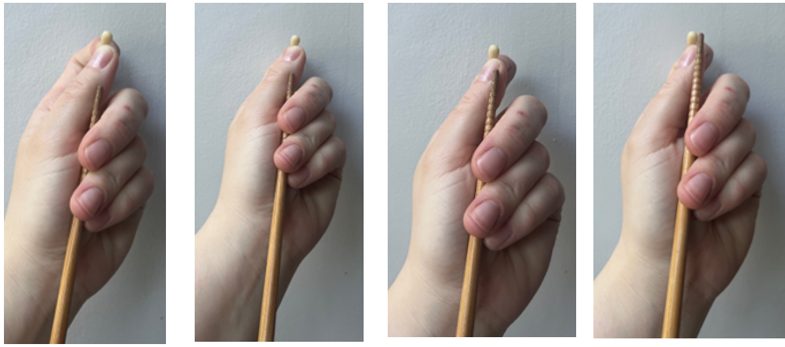
Once they are comfortable with the target getting closer to them you can start the next stage. Start to offer them a treat just in front of the target end (figure 1) repeat this step for a few days, gradually moving the target closer until the treat is essentially on top of the target. At this point your parrot should be comfortable enough with the target to start to interact with it. Any time that your parrot interacts with the target initially (yes, even if they just touch the air right in front of it) they should immediately receive a reward. You can start to link a word to this like ‘Target’ or ‘Touch’. As your parrot become more comfortable you will start to only reward when the target is actually touched. If any aggressive biting of the target starts, go back a step and go even slower. Aggression to the target shouldn’t be rewarded and a pause should be taken as it is a sign of fear or discomfort in your parrot.
Once the behaviour is very solid (I.E you say the ‘word’ then the target is touched) you can start to ask them to move to touch the target. Like having to walk towards it or climb up or down to reach it.
Now you have the basics of target training covered and a whole world of fun training and bonding has opened up! Well done!
Important Note!
-
Training should be done in short bursts, generally 5 minute maximum.
-
Training treats should be small (Think 1/3 – ¼ of a pine nut/sunflower seed for a green cheek conure sized bird) they should be able to be consumed quickly ( 5 seconds roughly)
-
If you are really struggling, we would advise reaching out to a professional trainer, some individuals may be more or less sensitive to things and having someone watch you train can be helpful to see something that you might not.
-
If you are having any behavioural problems (Aggression, feather destruction, screaming, etc) we would always recommend prioritising a workup with your avian friendly vet to rule out underlying issues. Pain is often underdiagnosed in parrots and can be a major reason for agression
Figure 1